
Reflections from our pilot Eco-systemic Walking Therapy sessions
On a sunny day last June, DRI’s Director and passionate walking leader, Mebrak Ghebreweldi, accompanied by Systemic and Family Psychotherapist, Shaila Sheikh, piloted a new initiative that blends nature, low-impact physical activity and psychological therapy in a beautifully delivered project: Eco-systemic Walking Therapy.
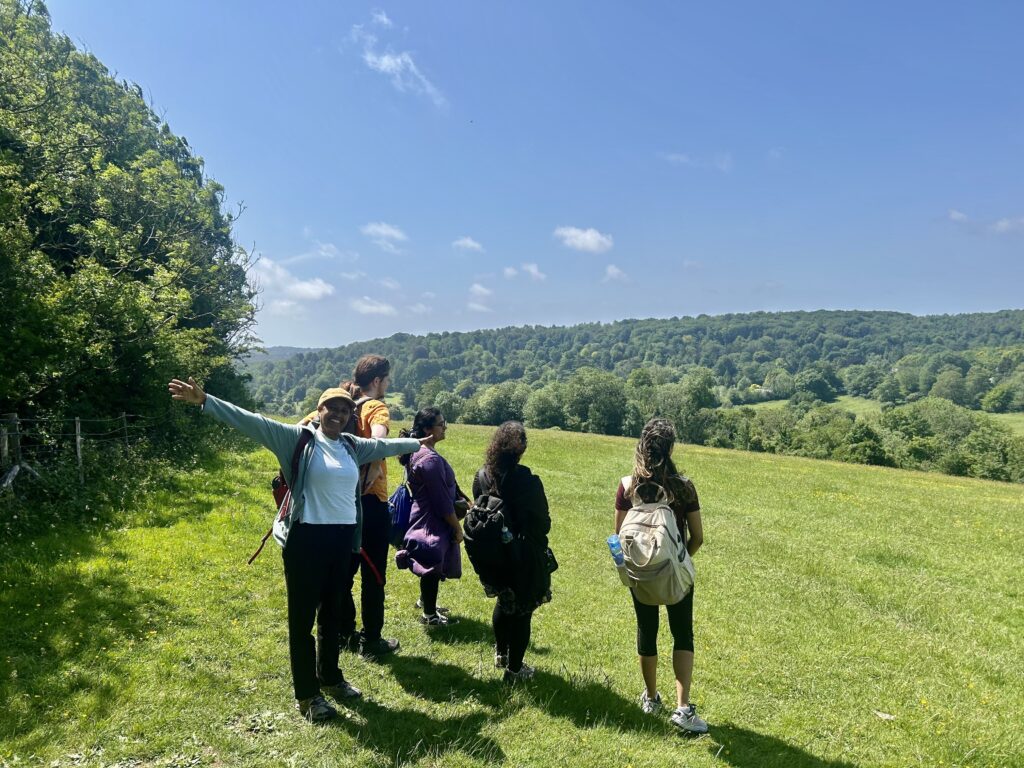
Shaila and Mebrak welcomed two small groups on Saturday, the 14th of June. One mixed-gender group in the morning, and a women-only group in the afternoon.
After a week of rain, we were all glad that this particular day welcomed all walkers with rays of sun, dry grass and a warm temperature at 18 degrees.
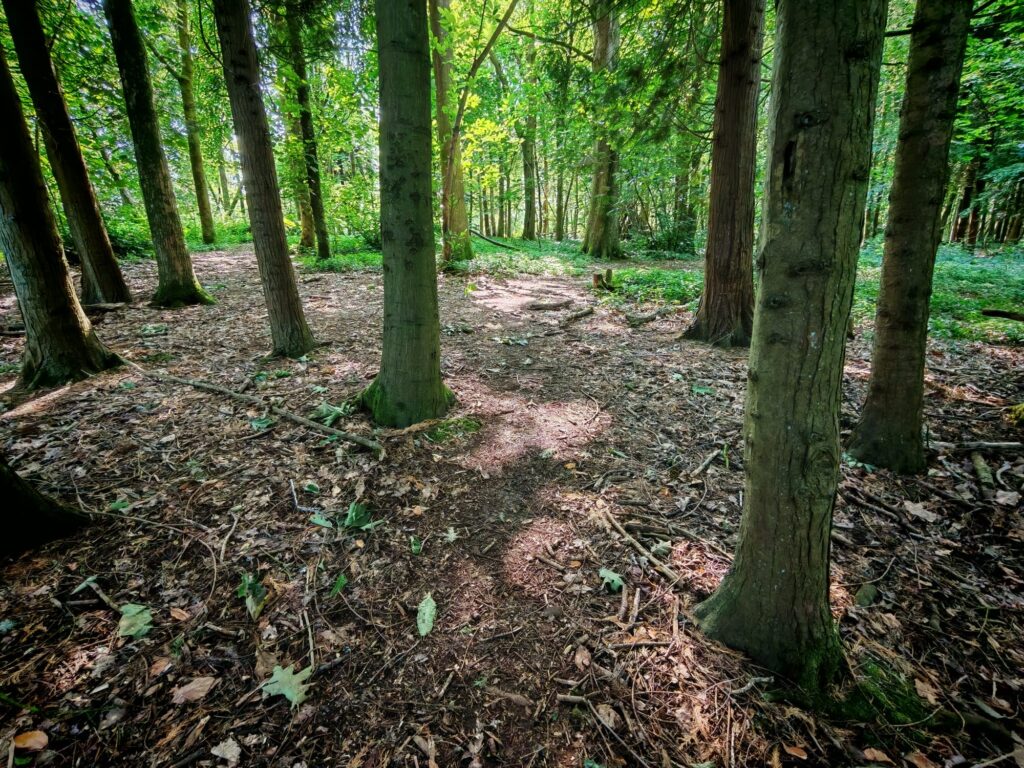
During the walk, Shaila encouraged the walkers to reflect on their connection to nature. She provided tools and prompts to understand how they could become more aware of the spaces they inhabit and use all their senses to ground themselves in the natural world that surrounds them.
She also took the time for informal one-on-one conversations with each participant, exploring more personal topics such as culture, upbringing, and current concerns.
This is how Shaila recalls the experience:
As a fledging in the ecosystemic therapy world, I both cautiously and excitedly joined Mebrak, a DRI community walking leader, to trial and explore some ecosystemic ideas with interested walkers, or co-explorers, in and with nature. The nature being the beautiful grounds of Stanmer Park in Sussex.
Stanmer is a local and familiar landscape, having spent many times wandering and getting lost there with friends and families. I knew it held a similar place for Mebrak as we had talked of this on our planning and scouting day in the park, prior to the group walks.
This planning trip helped me feel comfortable and at ease with the landscape we were inviting our co-explorers into, and also with Mebrak, and how we might support each other as well as the groups on this ‘adventure’.
I am embracing the idea of ‘adventure’ to describe our ecosystemic therapy walks as it felt very much like this to me. I was uncertain how the groups would engage and if the time, landscape, together with me and Mebrak, could facilitate a welcoming, safe, confidential, connecting and enjoyable space.
I felt the small group sizes helped with this and the time we spent at the beginning for introductions, discussing and agreeing expectations, alongside the considerations of consent and confidentiality within the openness of the park environment, all contributed to the ‘feel’ of our adventure. It felt gentle and open-of-heart-and-mind and it was a wonderful day spent with the two groups.
Highlights were the slowing down and being with nature, taking cues from our landscape to be interested in ourselves, and our ‘internal landscapes’ as Chiara Santin talks of in her inspiring book ‘Rewilding Therapy’ (2024). The beauty of this within the groups was in the way sharing both outer and inner landscapes created connection, helping people feel held and valued by others and by nature.
Sometimes this meant just walking alone or side-by-side and being aware of the sights, sounds, smells and feel of our environment. Sometimes, I brought the systemic idea of ‘curiosity’ (Cecchin, 1987) and encouraged the sharing of these experiences and connections to people, places and times of significance to us. But sometimes it was enough to let nature do her work.
This is a key learning for me. Perhaps my desire ‘to be’ an ecosystemic therapist meant I was too keen and asked too much and too soon.
Verbal and nonverbal feedback from Mebrak and the group encouraged me to remember to hold the systemic idea of ‘irreverence’ and not attach too strongly to my ideas of what ecotherapy should look like and ‘resist being captured by any one version of the truth, including [my] own’ (Cecchin, 1987).
I’m optimistic that as I develop in my practice, and stay attuned with my co-explorers and the land we travel in and through, I can relax into trusting my senses as a systemic psychotherapist to navigate our adventures and psychological wellbeing together.
The walk also inspired Mebrak to reflect on her personal connection to walking, and how working with Shaila in this initiative transported her back to where that relationship first began:
Growing up in Eritrea, the natural world was never something separate from us, it was part of our daily lives, part of our survival, our faith, and our joy.
When the rains didn’t come in May, men and women would visit churches and mosques more often, praying to God, the angels, and to Rebi/Allah.
But if the skies stayed dry into June, the wise women of the village took it into their own hands. Carrying seeds and ploughing tools, they would climb one, two, even three mountains in a day singing, dancing, sowing seeds, and mimicking the act of ploughing at the highest peaks. They believed that the higher you climbed, the closer you were to God.
We children followed them, eyes turned skyward, hands stretched wide in hope and prayer. And often, the rains would come. Our gratitude would rise again to the sky.
That’s where my love for walking and mountains began rooted in ritual, community, and a deep relationship with the land.
Later, as a young girl, I joined the Eritrean People’s Liberation Front. Throughout my teenage years, I fought for our national freedom. In those years, the same mountains, valleys, and wild trees became our shield. They protected us from Ethiopian bombs, missiles, and jet aircraft. The land itself fought alongside us. The earth bore the wounds of war and yet remained, silently holding us in its arms.
To this day, I carry that deep bond with the natural world. It is spiritual for me—a place where I feel close to God, a space where I can be free, unjudged, accepted. The whisper of the trees, the scent and softness of grass, the wide-open skies, and drifting clouds they listen. They have answered my questions in quiet voices. They have helped me breathe through grief, think beyond limitations, and remain rooted in my truth.
Now, living in the fast-paced, often overwhelming Western world, nature continues to be my sanctuary. Give me water, an apple, and a banana and let me sit under a tree, on the lush grass of the South Downs or the mountains of Eritrea. That’s enough. That is healing.
On the 14th of June, walking with others on an ecosystemic therapy walk led by a qualified therapist Shaila Sheikh and myself as a walking leader, I felt something familiar and sacred. I never called it “ecosystemic therapy” before, but if that’s the name for it, then I can assure you: it works. It has worked for me for years.
This is my invitation to you, come walk with us. Come sit with us. Let’s share a sandwich, an apple, or a banana together under the trees. Let’s remember what it feels like to belong not just to each other, but to the land itself.
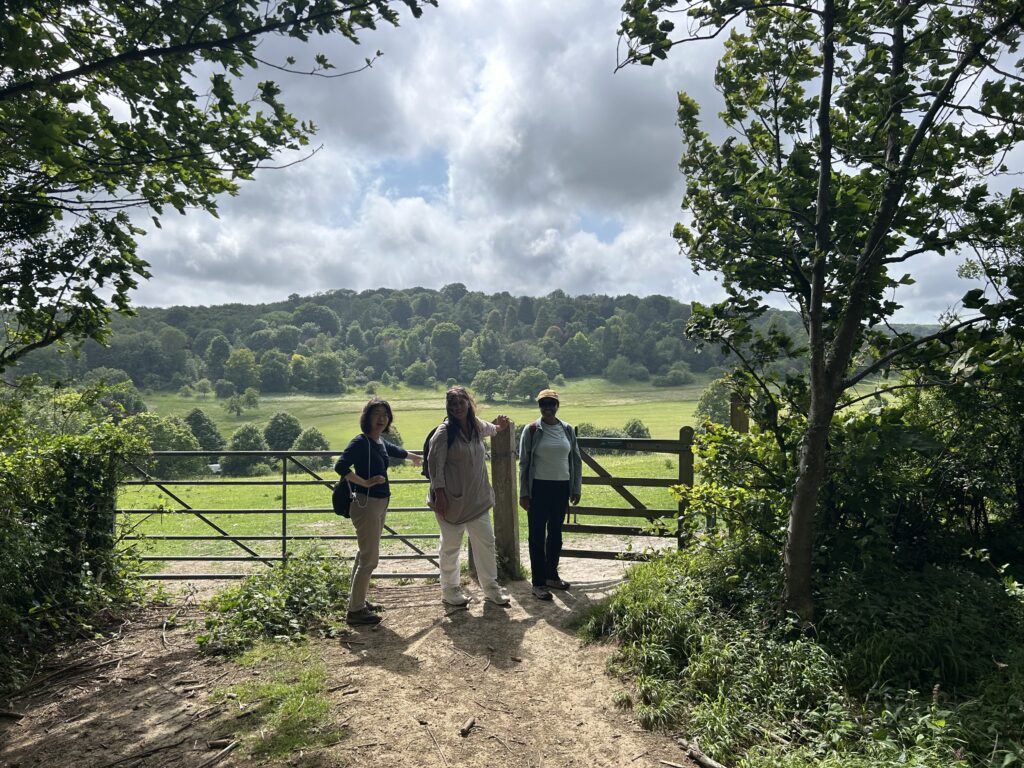
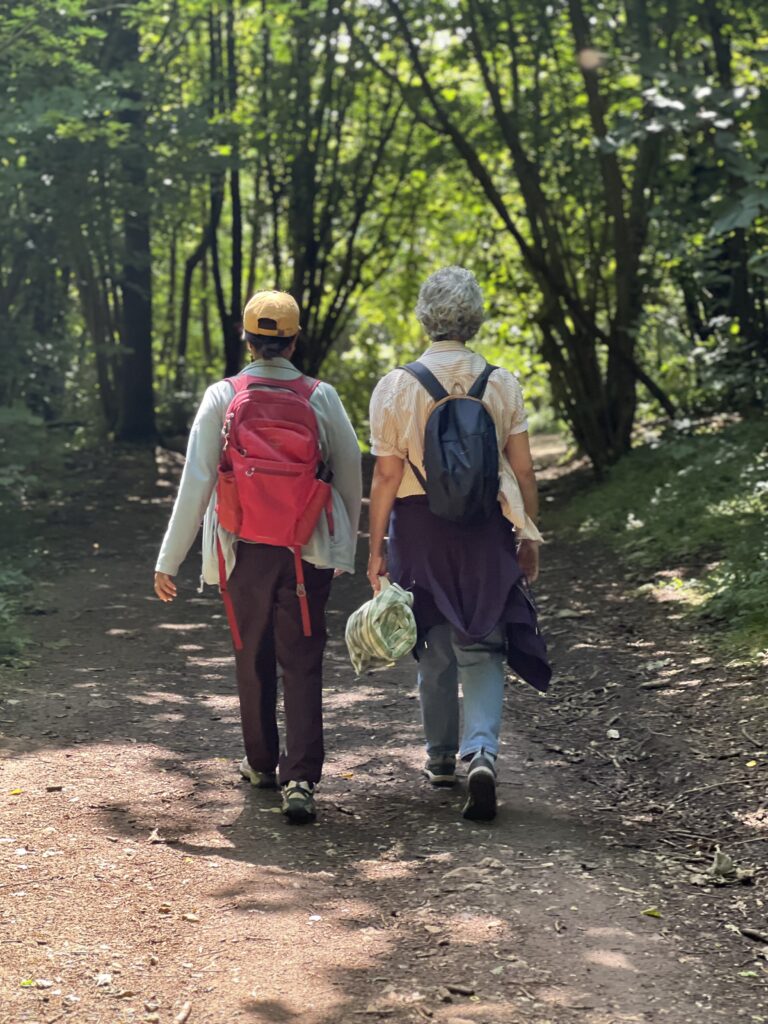
Eco-systemic Walking Therapy is a process of pausing, noticing, connecting, gathering, and sharing; not just with the natural world, but with one another. Rooted in systemic principles, this approach pays close attention to context, relationships, and our deep interdependence.
As we carry forward the reflections from our pilot Eco-systemic Walking Therapy, we hope to obtain the financial resources we need to organise one of these walks again, to discover new places, meet new people, and deepen our connection to the land beneath our feet. We want to walk with intention and offer these spaces for healing, grounding, and belonging.
